Barbara’s family · 26th great-grandfather
William I 1st Lord of Bramber De Braose
1st Lord of Bramber
1049 – 1087William de Braose, described as the 1st Lord of Bramber, was born in 1049 and died in 1087. By 1073 he held extensive lands in Sussex and became feudal baron of the Rape of Bramber, where he built Bramber Castle. He also held lands in Dorset, Surrey, Berkshire, and Wiltshire, and was involved in a major dispute with Fécamp Abbey over rights at Bramber and Steyning.
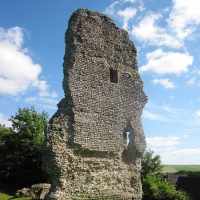
William de Braose, described as the 1st Lord of Bramber, was born in 1049 and died in 1087. By 1073, he had been given extensive lands in Sussex. He became feudal baron of the Rape of Bramber and built Bramber Castle. He also received lands around Wareham and Corfe in Dorset, two manors in Surrey, Southcote in Berkshire, and Downton in Wiltshire. These holdings made him one of the powerful new feudal barons of the early Norman era.He continued to bear arms alongside King William in campaigns in England, Normandy, and Maine in France. He was also described as pious. He made considerable grants to the Abbey of Saint Florent at Saumur and endowed the foundation of priories at Sele, near Bramber, and at Briouze.
At Bramber, William occupied a new Norman castle that guarded the strategically important harbour at Steyning. He built a bridge at Bramber and demanded tolls from ships travelling farther along the river to the port at Steyning. This led to a boundary dispute and struggle for authority with the monks of Fécamp Abbey, to whom King William had granted Steyning.
The monks disputed William's tolls and his claimed right to bury people in the churchyard of Saint Nicholas at Bramber. They maintained that burial fees belonged to the abbey, although the church had been built to serve the castle rather than the town. The notes state that the monks produced forged documents in support of their claims. They also asserted claims at Hastings similar to those they held at Steyning. King William confirmed the abbey's claims to Steyning in 1085 and compensated its claims at Hastings with land in the manor of Bury, near Pulborough in Sussex.
In 1086, King William called his sons, barons, and bishops to court to settle the Steyning disputes. The hearing reportedly lasted a full day. The result favored Fécamp Abbey. William de Braose was required to limit his bridge tolls and surrender several encroachments on the abbey's land, including a rabbit warren, a park, 18 burgage tenements, a causeway, and a channel used to fill his moat. He also had to arrange for the exhumation of Bramber's dead and their transfer to the churchyard of Saint Cuthman at Steyning.
Historical context
William de Braose's career, as described in the supplied notes, belonged to the early Norman period in England. His holdings at Bramber and elsewhere formed part of the new feudal order after the Norman Conquest. His dispute with Fécamp Abbey illustrates the competing claims of Norman landholders and religious institutions over land, tolls, burials, and local authority.
Sources & research
[1] Citation referenced in the supplied family tree maker notes for William de Braose's lands in Sussex and other landholdings; no bibliographic details were supplied.
[2] Citation referenced in the supplied family tree maker notes for his position as feudal baron of the Rape of Bramber; no bibliographic details were supplied.