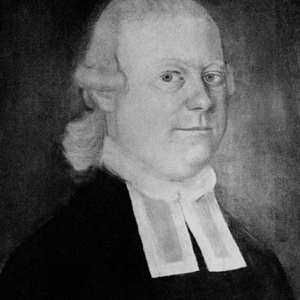
· 10th Great Grandfather
Nicholas Noyes "Reverend Salem Witch Trials"
Reverend Salem Witch Trials
22 Dec 1647 –13 Dec 1717Rev. Nicholas Noyes II (22 December 1647 – 13 December 1717) was a Massachusetts-born clergyman who graduated from Harvard in 1667, preached in Haddam, Connecticut, and became a minister in Salem in 1683. He is associated with events of the Salem witchcraft prosecutions of 1692.
Nicholas Noyes II was born on 22 December 1647 in Newbury, Essex, Massachusetts Bay Colony. He was the son of Rev. Nicholas Noyes and Mary Cutting Noyes, the grandson of Rev. William Noyes, and the nephew of Rev. James Noyes.He graduated from Harvard in 1667. During King Philip’s War, in 1675–1676, he spent time as a chaplain with troops in Connecticut. He then preached for thirteen years in Haddam, Connecticut. In 1683, he moved to Salem, Massachusetts Bay Colony, where he served as a minister for the remainder of his life.
Noyes was present in a clerical role during the Salem witchcraft prosecutions. Before Sarah Good’s execution on 19 July 1692, he asked her to confess. Family-tree notes preserve a later legend that she replied, “I'm no more a witch than you are a wizard, and if you take away my life God will give you blood to drink.” The same notes state that this wording does not appear in contemporary reports of her execution. Another later legend says that Noyes died twenty-five years afterward by choking on his own blood.
On 22 September 1692, Noyes officiated as clergyman at the final hangings of persons accused of witchcraft. It was reported that he turned toward the suspended bodies and said, “What a sad thing it is to see eight firebrands of hell hanging there.”
On 14 November 1692, seventeen-year-old Mary Herrick accused Noyes’s cousin, Sarah Noyes Hale, and the ghost of the executed Mary Eastey of afflicting her. Sarah Noyes Hale was the wife of John Hale, the daughter of Deacon James Noyes, and the granddaughter of Rev. William Noyes. She was never formally charged or arrested. A later commentator, Charles Upham, suggested that this accusation helped shift public opinion against further prosecutions and encouraged John Hale to reconsider his support for the trials.
Nicholas Noyes II died on 13 December 1717 in Salem, Essex, Massachusetts Bay Colony.
Historical context
Noyes’s ministry included the period of King Philip’s War in 1675–1676 and the Salem witchcraft prosecutions of 1692. His reported participation at executions and his connection to people involved in the accusations place him among the Salem clergy associated with those events.
Sources & research
Original Family Tree Maker notes, citation [2]: States that Nicholas Noyes II was the son of Rev. Nicholas Noyes and Mary Cutting Noyes; grandson of Rev. William Noyes; nephew of Rev. James Noyes; a Harvard graduate in 1667; preacher in Haddam, Connecticut, for thirteen years; and Salem minister from 1683 until his death.
Original Family Tree Maker notes, citation [3]: States that he spent time as a chaplain with troops in Connecticut during King Philip’s War in 1675–1676.
Original Family Tree Maker notes, citation [4]: Discusses the alleged exchange between Noyes and Sarah Good before her execution on 19 July 1692 and notes that the quoted wording does not appear in contemporary execution reports.
Original Family Tree Maker notes, citation [5]: Gives the later legend that Noyes died from choking on his own blood twenty-five years after Sarah Good’s execution.
Original Family Tree Maker notes, citation [6]: Reports Noyes’s role as clergyman at the final hangings on 22 September 1692 and attributes to him the reported “eight firebrands of hell” statement.
Original Family Tree Maker notes, citation [7]: Records Mary Herrick’s 14 November 1692 accusation against Sarah Noyes Hale and the ghost of Mary Eastey, and states that Sarah Noyes Hale was never formally charged or arrested.
Original Family Tree Maker notes, citation [8]: Attributes to later commentator Charles Upham the suggestion that the accusation against Sarah Noyes Hale helped turn public opinion against continued prosecutions and influenced John Hale’s reconsideration of his support.