Barbara’s family · 10th great-grandmother
Mary Butterworth
Plymouth Colony era
29 AUG 1629 – 29 AUG 1714Mary Butterworth Mason was the wife of Sampson Mason of Dorchester and Rehoboth in Plymouth Colony. She survived him by nearly thirty-eight years, managed his estate after his death in 1676, and died at Rehoboth on 29 August 1714. A later compiled account identifies her maiden name as Butterworth and records thirteen children.
Mary Butterworth, later Mary Mason, is reported in a Find a Grave memorial to have been born 29 August 1629 in Norfolk, England. That memorial identifies her as a daughter of Henry Butterworth and Mary “Marie” Longbottom. These parentage, birthplace, and immigration details are not established by the colonial records quoted in the supplied material and should be treated as later compiled information.Mary married Sampson Mason, reportedly on 9 March 1649. Sampson was a cordwainer of Rehoboth when he made his will in 1672. The supplied historical account identifies Mary’s maiden name as Butterworth from that will and related court material: Sampson named “my brother John Butterworth” as an overseer, and the court later appointed “her brother Butterworth” to assist Mary with the estate.
The family was in Dorchester during its earlier years. A 1649 Suffolk record concerning Edward Bullock’s estate noted a debt due to Sampson Mason for “wife’s shoes,” and Suffolk deed records reportedly show that Sampson bought a house and land at Dorchester in 1651 before later selling the property and removing to Rehoboth. Rehoboth voted on 9 December 1657 to allow Sampson Mason to sojourn and to purchase property if he chose to settle there.
Mary and Sampson were said to have had thirteen children. The supplied account gives the children as Noah, Sampson, Samuel, John, Sarah, Mary, James, Joseph, Bethia, Isaac, Pelatiah, Benjamin, and Thankful. It states that the births of nine children were recorded at Rehoboth, while several of the elder children were probably born at Dorchester.
Sampson Mason made his will on 22 October 1672. He left the use of his estate to Mary during her widowhood, subject to the gifts and legacies specified in the will. He named her sole executrix and appointed John Myles, James Brown, and John Butterworth as overseers. The will provided for their sons and directed that their four daughters receive portions as Mary and the overseers considered suitable.
Sampson Mason was buried at Rehoboth on 15 September 1676. After his death, the Plymouth Colony Court permitted Mary to sell part of the land to pay for land that had been purchased but not yet paid for, with the remaining estate to be used in raising the children. In accounts of Rehoboth’s advances during King Philip’s War, his widow was credited £13-5-10, a credit attributed in the supplied narrative to the settlement of the estate after the war’s losses.
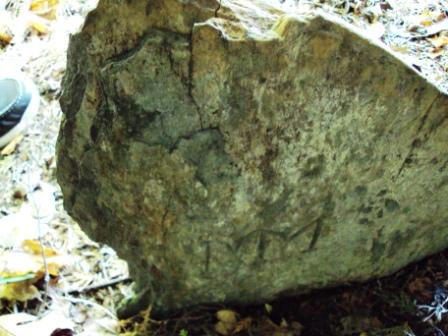
Mary Mason remained a widow. The Rehoboth record cited in the supplied material states: “Widow Mary Mason, wife of Sampson Mason, Senr., died August 29, 1714.” She died on the same calendar date as her reported birth, at age eighty-five if the reported 1629 birth date is correct. The historical account states that the burial place of Sampson and Mary was not known. A Find a Grave memorial, however, gives Ancient Little Neck Cemetery in East Providence, Rhode Island, as Mary’s burial place; this claim conflicts with the earlier statement that the burial location was unknown and requires independent confirmation.
Historical context
Mary Mason lived in the early New England communities of Dorchester and Rehoboth, within the Plymouth Colony era. The supplied account describes Sampson Mason as a Baptist and notes that Baptists in Rehoboth could receive only limited civic privileges as sojourners. The family was associated with the settlement of Swansey, incorporated in 1667, although the account considers it likely that Sampson and Mary remained residents of Rehoboth. Mary’s long widowhood included the difficult period immediately following King Philip’s War, when she was responsible for settling and preserving the family estate for their children.
Sources & research
“Sampson Mason, the Baptist and Dragoon in Oliver Cromwell’s Army,” communicated by Hon. Ira M. Barton, A. M., of Worcester, Massachusetts; posted 18 Sep 2012 by eathorp. Includes references to Backus’s Church History; Benedict’s History of the Baptists; Baylies’s Memorial of the Plymouth Colony; Leonard Bliss Jr., History of Rehoboth; Suffolk Registry of Deeds; Rehoboth, Swansey, Plymouth Colony, church, and municipal records; and Blackstone Monument Association registry.
Plymouth Colony Wills, vol. 3, part 2, p. 49: will of Sampson Mason, dated 22 October 1672.
Printed Records of Plymouth Colony, vol. 5, pp. 213 and 221: probate and estate orders concerning Sampson and Mary Mason, 1676.
New England Historical and Genealogical Register, vol. 6, p. 356: Edward Bullock estate reference.
New England Historical and Genealogical Register, vol. 6, p. 94: John Brown will reference.
New England Historical and Genealogical Register, vol. 5, p. 400: Dorchester church-record reference concerning John Mason.
New England Historical and Genealogical Register, vol. 4, p. 167: Ancient Epitaphs of Dorchester reference.
New England Historical and Genealogical Register, vol. 7, p. 243: reference concerning Susannah Mason and Rev. Isaac Backus.
Commonwealth v. Viall, 2 Allen’s Reports, p. 512.
Find a Grave Memorial #42068366, “Mary Butterworth Mason,” created 17 Sep 2009; accessed through material posted 08 Mar 2013 by eathorp.
“Notes for Mary Mason,” posted 08 Mar 2013 by eathorp.