·
John Clarke (Mayflower's Ship's Pilot and Master's Mate)
Mayflower's Ship's Pilot and Master's Mate
26 MAR 1575 – 10 APR 1623John Clarke (1575–1623) was a seaman identified as the Mayflower’s ship’s pilot and master’s mate. Family-tree notes describe earlier voyages to Virginia, years of Spanish captivity, service aboard the Mayflower in 1620, and a later return to Jamestown.
John Clarke was born on 26 March 1575 in England. By the time he joined the Mayflower voyage, he was described as an experienced sailor with prior experience in America.According to the supplied account, Clarke first traveled to Virginia in 1609, carrying goods and colonists to Jamestown. While there, he reportedly spent about forty days moving livestock and other goods along the coast. An unfriendly Spanish vessel then arrived on the Virginia shore, seized Clarke, and carried him first to Cuba and then to Spain.
The account states that Clarke was held and questioned in Spanish captivity for roughly seven years, during the period of the Spanish Inquisition. It further says that Spanish authorities sought information about English and Protestant plans in the New World. King James reportedly arranged Clarke’s release in 1616, possibly through a ransom or prisoner exchange; this detail is presented as uncertain in the supplied material.
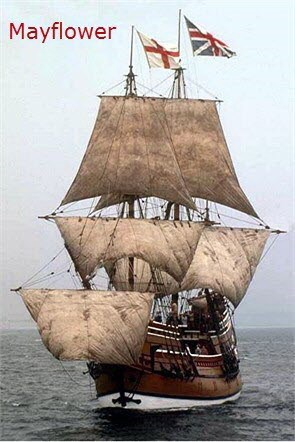
After his release, Clarke returned to maritime work. The account says that in 1619 he sailed with Thomas Jones to carry livestock to Virginia. In 1620, he served as pilot on the Mayflower under the ship’s master, Christopher Jones.
The Mayflower’s crossing was marked by severe storms. After reaching the tip of Cape Cod, passengers and crew explored the coast for a settlement site. In December 1620, Clarke was said to be captain of a small shallop used during exploration around the shores of Duxbury and Plymouth. When a sudden storm threatened the boat, the party rowed to a small island off Duxbury. The supplied account says that the island was named Clark’s Island in recognition of Clarke’s role in bringing the crew safely ashore.
The same account states that Clarke received two shares in the Virginia Company and later returned to Jamestown. It places him there during continuing conflict with the Powhatan people and associates his death with the 1622 attack on Virginia colonists. However, the supplied life dates give his death as 10 April 1623, so the circumstances and timing of his death should be treated with caution.
Historical context
Clarke’s career, as described in the supplied material, took place during the early English colonization of Virginia and New England. His reported capture by Spanish forces occurred amid English-Spanish rivalry in the Atlantic world. His Mayflower service came during the 1620 voyage that carried English settlers to Cape Cod and the future Plymouth settlement. The later Virginia conflict mentioned in the account followed the 1622 attack in which, according to the supplied narrative, Powhatan people killed many English colonists.
Sources & research
New England Historical Society, “John Clarke Guides Pilgrims Shore,” https://www.newenglandhistoricalsociety.com/john-clarke-guides-pilgrims-shore/