Barbara’s family · 6th great-grandfather
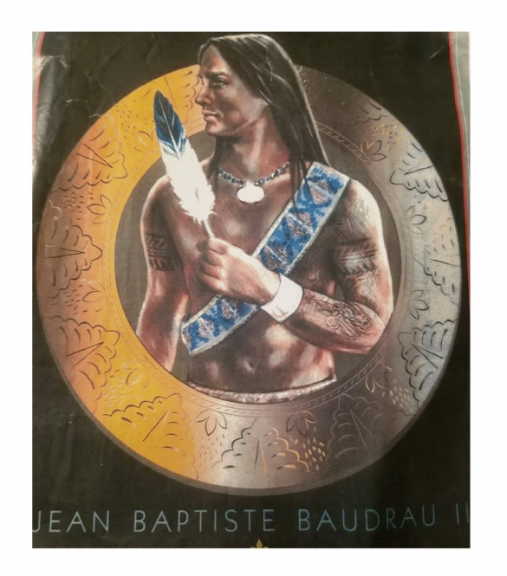
Jean Baptiste Beaudreau Dit Graveline II
trader and colonial intermediary. executed on the Breaking wheel.
1715 – 7 JUN 1757Jean Baptiste Beaudreau Dit Graveline II, also called Jean Baptiste Baudreau Dit Graveline, was reportedly born about 1715 in French Louisiana and died in New Orleans on 7 June 1757. Family-tree notes describe him as a trader and colonial intermediary with Native communities around Mobile and Pascagoula. They further state that, after being taken hostage during a 1757 prison mutiny, he was tried and executed by the breaking wheel despite a certificate from the mutineers asserting that he had not participated.
Jean Baptiste Beaudreau Dit Graveline II, also recorded in the supplied notes as Jean Baptiste Baudreau Dit Graveline, was reportedly born about 1715 at Massacre Island, now Dauphin Island, Alabama, in French Louisiana. He was the son of Sieur Jean Baptiste Baudreau Dit Graveline and a Native woman identified as Suzanne. His father is described in the notes as captain of the Pascagoula militia and as an early settler of Pascagoula, Mississippi, and old Mobile. The notes state that Jean Baptiste was born before his parents' marriage and that his father married Suzanne in 1727 in an effort to legitimize him.In 1734, Jean Baptiste married Marie Catherine Viconneau, who is described as Protestant. The notes state that their children were his legitimate children, but do not name them.
During the 1740s, he reportedly had a relationship with Marie Henriette Huet, described in the notes as a mulatto woman whose family owned a plantation near present-day Portersville Bay. They reportedly had two children. The notes further say that descendants of these children commonly used the surname Baptiste, later rendered Battiste in Mobile, and that one child is regarded by unnamed modern historians as a founder of Coq d'Inde, now Coden, Alabama.
The supplied account portrays Jean Baptiste as having a significant but difficult role in French colonial life. He reportedly had favorable relations with Bienville and was sent on trading journeys into Creek territory, while some French officials distrusted him because of his close connections with Native communities and his mixed Native ancestry. In the 1740s, he was reportedly imprisoned on kidnapping charges arising from a journey to Havana, Cuba. He escaped and took refuge in Native villages north of Mobile. According to the notes, Native people then refused further trade with the French until he received a pardon. Governor Vandrieul reportedly petitioned King Louis XV to dismiss the charges, and the king did so.
In 1747, while Jean Baptiste was reportedly evading French authorities after his escape, Marie Henriette Huet filed a claim for support for their children. The notes state that his father agreed to assist in supporting them.
In the 1750s, Jean Baptiste was reportedly confined at the French prison on what is now Cat Island, Mississippi, on charges of illegally salvaging wrecked ships. In 1757, soldiers at the prison mutinied and killed their commanding officer. The notes state that they took Jean Baptiste hostage and compelled him to guide them away from the colony. They reportedly gave him a signed certificate stating that he had not been a participant in the mutiny. Nevertheless, Governor Kerlerec had him court-martialed, and he was sentenced to death.
Jean Baptiste died in New Orleans, Louisiana, on 7 June 1757. The supplied notes state that he was executed by the breaking wheel in front of St. Louis Cathedral and that his remains were later mutilated and deposited in the Mississippi River. The claim that he was among the few people executed by this method in the Americas requires documentary verification.
His father died in 1763. According to the notes, the elder Graveline's will disinherited his deceased son, stating that he had married Suzanne to legitimize him and giving reasons for the disinheritance.
Later accounts cited in the supplied notes connect the family with Gulf Coast place names and public memory. Graveline Bay, along the southern Mississippi and Alabama coast, is said to have been named for Jean Baptiste's father. Urbain Baudreau Dit Graveline Park in Montreal, Quebec, is said to honor his grandfather. The notes also report a continuing effort by some descendants to seek a historical marker in Jackson Square, New Orleans; advocates reportedly held a rally there in 2007. Additional claims of descent from Jean Baptiste, a fictional work inspired by his relationship with Marie Henriette Huet, and the wartime fate of a later descendant are unverified in the material supplied.
Historical context
Jean Baptiste lived in French Louisiana during a period when Mobile, Pascagoula, the Gulf Coast, and New Orleans were connected by colonial administration, trade, military posts, and relations with Native nations. The supplied notes depict him as moving between these worlds through trade and family connections. They also describe colonial imprisonment, a military mutiny, and a court-martial, but provide no original records or citations for those events.
Sources & research
No sources or identifiable citations were supplied with the family-tree notes.