· 12th great uncle
Colonel John Rolfe II (John)
{Twin of Eustatius} Indian Massacre in 1622; Colonial Immigrant (Pocahontas), Sea Venture
06 May 1585 - 22 Mar 1622John Rolfe was an early English colonist in Virginia, remembered for cultivating marketable tobacco, serving in colonial offices, and marrying Pocahontas, who was also known as Rebecca. His parentage and precise birth details remain uncertain. He survived the wreck of the Sea Venture, was widowed twice before marrying Jane Pierce, and died in March 1622.
John Rolfe’s parentage has not been determined. He is believed to have been born about May 1585, perhaps in Norfolk, England; some accounts place him in or near Heacham, but the supplied material treats this as uncertain. Older sources identified him as the son of John Rolfe and Dorothy (Dorothea) Mason of Heacham and as the twin of Eustace Rolfe, born 6 May 1585. The supplied material states that the records do not support that identification. It does identify Henry Rolfe, an investor in the Virginia Company, as John’s younger brother.In 1608, John Rolfe married Sarah Hacker. On 2 June 1609, they sailed from Plymouth aboard the Sea Venture, flagship of the Virginia Company’s Third Supply expedition to Virginia. Other passengers named in the supplied material included George Somers, Thomas Gates, Christopher Newport, William Pierce, Samuel Jordan, Richard Bucke, William Strachey, Namontack, and Machumps.
The Sea Venture encountered a hurricane and was wrecked at Bermuda on 25 July 1609. According to the supplied account, 150 people and a dog reached shore. The survivors salvaged materials from the ship and built two vessels, the Deliverance and the Patience, to continue to Virginia. During their stay on Bermuda, John and Sarah had a daughter called Bermuda in February 1610. She was christened on 11 February, with Christopher Newport and William Strachey named as witnesses; the account says that Strachey was her godfather. The child died soon afterward, and Sarah Rolfe also died on Bermuda.
The survivors departed Bermuda on 10 May 1610 and arrived at Jamestown on 24 May. They found the settlement in severe distress; the supplied material reports that only 60 colonists remained alive. As the Virginia Company sought goods that could support the colony, Rolfe turned to tobacco cultivation. The supplied material says that he used seeds from Trinidad to develop a sweeter tobacco called “Orinoco,” and that exports beginning in 1612 helped make Virginia profitable. Tobacco later became central to the colony’s economy.
Rolfe served as secretary and recorder general of Virginia from 1614 to 1619 and as a member of the governor’s Council from 1614 to 1622. In 1613, Captain Argall took Pocahontas, daughter of Powhatan, to Jamestown in connection with negotiations concerning English prisoners. During her captivity, she converted to Christianity and took the English name Rebecca. Rolfe, then a widower, met her during this period.
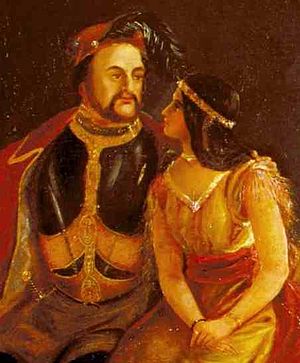
After negotiations with Powhatan and with permission from Governor Dale, John Rolfe and Pocahontas were married in April 1614. The supplied material describes the marriage as contributing to peace between the English colonists and the Powhatan people after the First Anglo-Powhatan War. Their son, Thomas Rolfe, was born in January 1615.
On 2 June 1616, the Virginia Company sent John, Rebecca, and Thomas Rolfe to England to promote Virginia. They traveled with Governor Sir Thomas Dale and other Powhatan people, including Tomocomo. Before the family could return to Virginia, Pocahontas became gravely ill and died at Gravesend. Thomas was also ill, and Rolfe left him in England. The supplied material states that court records name Sir Lewis Stukely as Thomas’s guardian and that Henry Rolfe later assumed custody of his nephew.
Rolfe and Tomocomo had returned to Virginia by May 1617. The supplied account reports that an epidemic described as “bloody flux” followed among colonists and neighboring Native communities. Rolfe resumed work on his plantation, and approximately 40,000 pounds of his tobacco were reportedly shipped to England in 1618.
In 1619, Rolfe married Jane, also called Joane, daughter of Captain William Pierce, who lived near Varina and had known Rolfe since the Sea Venture disaster. John and Jane had a daughter, Elizabeth Rolfe, born 25 January 1620/21.
On 10 March 1622, while ill, Rolfe made his will. The supplied heading gives his death date as 22 March 1622, but the narrative states that the exact date is unknown and that he died before the March 1622 attack often called the Indian Massacre of 1622. His burial place is also uncertain; the supplied material suggests Varina or Jamestown. It further notes that the loss of records, including records lost when a courthouse burned, contributed to uncertainty about his final days.
Rolfe is remembered for his role in developing tobacco as Virginia’s principal colonial export and for his marriage to Pocahontas. The supplied material regards both the tobacco enterprise and the period of peace associated with the marriage as important to the colony’s early survival and development.
Historical context
Rolfe lived during Virginia’s early years as an English commercial colony supported by the Virginia Company. The settlers sought products that could make the venture financially viable, experimenting with goods including silk, glass, lumber, sassafras, pitch, tar, and soap ashes. In the supplied account, tobacco became the colony’s major commodity after Rolfe’s cultivation of a marketable variety. His 1614 marriage to Pocahontas occurred amid conflict and negotiation between English settlers and Powhatan communities and was followed, according to the supplied material, by several years of peace.
Sources & research
No identifiable citations or source references were supplied.