David’s family
Leonard Halliday "Mayor of London"
Mayor of London
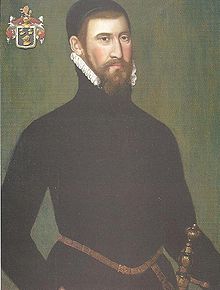
1537 – 9 JAN 1612 · 10th Great GrandfatherSir Leonard Halliday, also recorded as Holliday and Hollyday, was a London merchant, civic official, and an original director and joint treasurer of the East India Company. He served as Lord Mayor of London from 29 October 1605 to October 1606 and died on 9 January 1612. He is identified in the supplied family information as the 10th great-grandfather.
Perhaps in the late 1560s, Leonard was sent to London and served an apprenticeship with the Worshipful Company of Merchant Taylors. In May 1578 he married Anne, described as an heiress and as the daughter of William Wincoll, whose surname is also given as Wincott or Winhold, of Suffolk. They had three known children: Rowland, born in 1579 and dead in 1580; John, born in 1582 and dead in 1610; and Walter, who died in 1598. [1]
Halliday expanded his commercial interests when he joined the Levant Company in 1592. In 1594, he was among fourteen Merchant Taylors who pledged money under one of the company’s charitable schemes to assist an indigent widow. [2] That year he entered London’s local government as an alderman, and he served as one of the city’s sheriffs in 1595–96. [3]
In September 1599, Halliday was one of 125 merchants who formed the Governor and Merchants of the City of London Trading to the East Indies, later known as the East India Company. The company received its charter on 31 December 1600. Halliday was among its original “committees,” or directors, and served as joint treasurer from 1600 to 1602. [4] He invested £1,000 in the company’s first voyage, described in the notes as the largest individual stake. The first two voyages to India were profitable and provided imported merchandise for resale. [5]
King James I knighted Leonard Halliday on 26 July 1603. The notes state that he was one of 906 men knighted during the first four months of the new king’s reign. [6]
Sir Leonard was Lord Mayor of London from 29 October 1605 until October 1606. His installation was marked by a pageant, The Triumphs of Reunited Britannia. [7] A week later, on 5 November 1605, the plot to kill the king by blowing up the Houses of Parliament was foiled. As Lord Mayor, Sir Leonard was responsible for maintaining public order during the trial and execution of the conspirators in January 1606. On 2 August 1606, he hosted King James I and the king’s brother-in-law, King Christian IV of Denmark, during Christian’s state visit to England. [7]
During his lord mayoralty, Sir Leonard oversaw the redevelopment of Moorfields, a swamp north of the city wall. Despite public criticism, the area was drained and surfaced, and gardens and walks were laid out. The notes report that workers called the difficult labor “Holidaye worke.” [8]
Sir Leonard was Master of the Merchant Taylors Company in 1605–06. He remained a committee of the East India Company, invested £400 in its third voyage, and unsuccessfully stood for the company’s governorship, or chairmanship, in 1609. [4]
He died on 9 January 1612, leaving what the notes describe as a sizeable estate. His widow Anne married Sir Henry Montagu, later 1st Earl of Manchester, in November 1613. The notes state that she died in 1619, but give no supporting citation for that date.
In 1605, Sir Leonard obtained confirmation of his arms and a grant of a crest from the College of Arms. His arms were described as “Sable, three helmets Argent garnished Or, within a bordure engrailed of the second”: a black shield with three silver helmets trimmed in gold, within an engrailed silver border. His newly granted crest was the upper half of a gold lion facing forward and holding an anchor. [9]
Historical context
Sir Leonard’s career combined membership in London’s merchant institutions with civic office. His activities with the Merchant Taylors Company, the Levant Company, and the newly chartered East India Company placed him among merchants involved in overseas trade. His year as Lord Mayor coincided with the foiling of the 5 November 1605 plot and the 1606 state visit of King Christian IV of Denmark.
Sources & research
Original family-tree maker notes, including the following citation markers; no full bibliographic details were supplied.
[1] Citation attached to the statements concerning Leonard’s possible birth at Rodborough, Gloucestershire; his parents; and Anne’s father and Suffolk connection.
[2] Citation attached to the 1594 Merchant Taylors charitable pledge.
[3] Citation attached to his entry as alderman in 1594 and service as sheriff in 1595–96.
[4] Citation attached to his East India Company service as committee and joint treasurer, later continued service, £400 third-voyage investment, unsuccessful 1609 candidacy, and death date.
[5] Citation attached to his £1,000 investment in the East India Company’s first voyage.
[6] Citation attached to his knighthood on 26 July 1603.
[7] Citation attached to his lord mayoralty, installation pageant, and hosting of King James I and King Christian IV of Denmark.
[8] Citation attached to the Moorfields redevelopment and the reported term “Holidaye worke.”
[9] Citation attached to the 1605 confirmation of arms and grant of crest.
The original notes also state that Anne died in 1619, followed by “[citation needed].”