David’s family
Ætheling of England
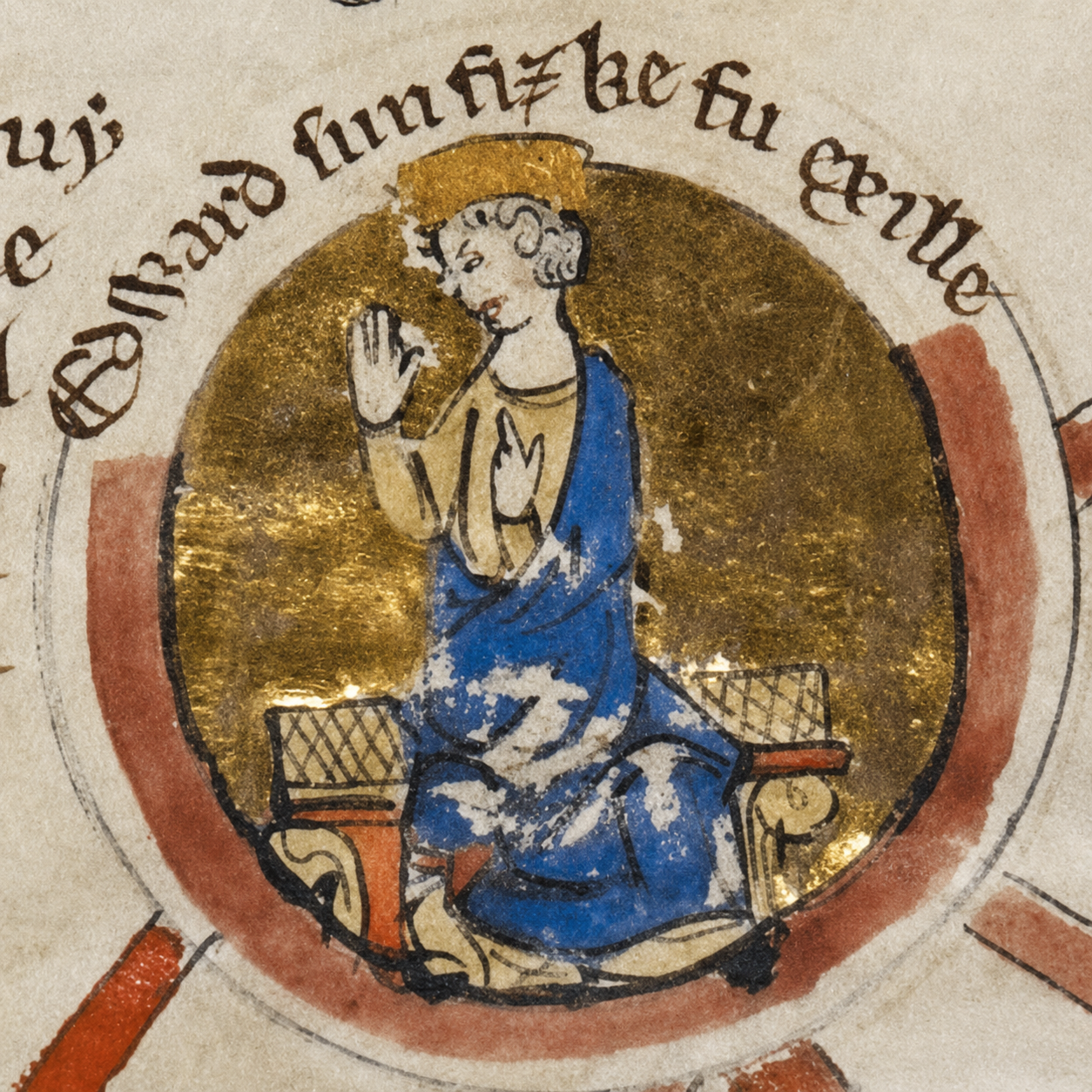
1016 - 19 Apr 1057 ·Edward the Exile, also called Edward Ætheling, was born in 1016, the son of King Edmund Ironside and Ealdgyth. Following the Danish conquest of England, he spent most of his life abroad, chiefly associated in family accounts with the Hungarian royal court. Recalled to England in 1057 as a possible successor to Edward the Confessor, he died on 19 April 1057, shortly after his return.
After the Danish conquest of England in 1016, Cnut is said to have sent Edward, then only a few months old, and his brother Edmund to the Swedish court of Olof Skötkonung, allegedly with orders that they be killed. According to this account, Olof, an ally of their grandfather Æthelred the Unready, secretly sent the boys instead to the Hungarian court of King Stephen I and Queen Gisela, believing them unsafe in the north while Cnut’s power was strong.[1][2]
The brothers reportedly remained at the Hungarian court until 1028. When they were about twelve years old, Cnut is said to have sent assassins after them. King Stephen then reportedly sent them to Gardorika, at the court of Yaroslav the Wise, Grand Prince of Kiev, where they could be protected and educated. In the 1030s, Andrew, an exiled Hungarian prince, joined them there.[3]
By 1043, Edward was said to have been raised to a position of sole responsibility in matters concerning the English crown or dynastic alliances, while his brother Edmund was reportedly in disfavor after causing a scandal.[4][5] When Andrew returned to Hungary in 1046 to regain the throne, Edward and Edmund likely accompanied him and may have fought with his army; they may also have been present at Andrew’s coronation.[6][7][8] Stephen I, whom the brothers had earlier known as a foster father, had died in 1038.
At some point, Edward received an estate from King Stephen known as Terra Britanorum de Nadasd, with Réka Castle at its center. The estate was probably connected with Edward’s marriage to Agatha, whose parentage is disputed and who is believed to have been related to King Stephen or Queen Gisela. The timing of the marriage is uncertain: many accounts place it between 1040 and 1045, although Stephen died in August 1038. Réka Castle is considered the birthplace of their daughter Margaret, and their other children may also have been born there. The family reportedly lived there until called to England.[9]
In 1054, Edward the Confessor sent Ealdred, Bishop of Worcester, to the court of the German emperor to begin negotiations with the king of Hungary for Edward’s return. The mission was initially unsuccessful. Harold Godwinson’s journey to Flanders in 1056, and possibly onward to Germany and Hungary, may have been connected with further negotiations. On learning that Edward was alive, Edward the Confessor recalled him to England in 1056 and is said to have made him his heir.
Edward arrived in England in 1057 with Agatha and their children. He died within a few days, on 19 April 1057, reportedly without meeting the king. He was buried in Old St Paul’s Cathedral.[10]
Edward’s wife was Agatha, although her origins remain disputed.[11] Their children were Edgar Ætheling, born about 1051 and living until about 1126; Margaret, later Saint Margaret of Scotland, born about 1045 and died 16 November 1093; and Cristina, born about 1057 and living until about 1093. Margaret married King Malcolm III of Scotland. Edgar was elected king of England after the Battle of Hastings but submitted to William the Conqueror. Cristina became abbess of Romsey Abbey. Edward’s granddaughter Edith of Scotland, also called Matilda, married King Henry I of England, continuing the Anglo-Saxon line in the post-Conquest English monarchy.
Historical context
Edward’s life was shaped by the Danish conquest of England in 1016 and the later restoration of an Anglo-Saxon king in the person of Edward the Confessor. By the time of Edward the Exile’s recall, the Confessor was childless. The family-tree notes portray Edward as a potential dynastic successor whose return could have offered an alternative to the claims of the Godwin family and William, Duke of Normandy. He died before that possibility could be tested.
Sources & research
Supplied family-tree notes, including citation markers [1] through [13].
[1][2] Account of the brothers’ transfer after the Danish conquest.
[3] Account of their move to Gardorika and association with Yaroslav the Wise.
[4][5] Statements concerning Edward’s position and Edmund’s reported disfavor.
[6][7][8] Statements concerning Andrew of Hungary’s return and the brothers’ possible participation.
[9] Statement concerning Terra Britanorum de Nadasd and Réka Castle.
[10] Statement concerning Edward’s burial.
[11] Statement that Agatha’s origins are disputed.
[12][13] Statements concerning Edward’s royal West Saxon ancestry.